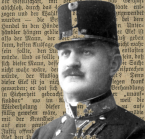
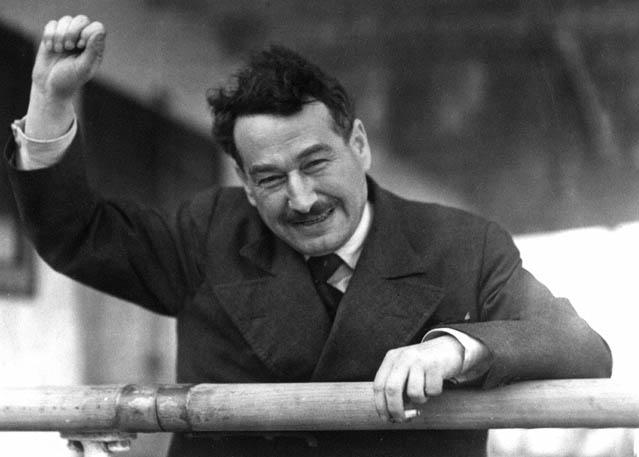
I chose the title “A Journalist for Me” because my research exposed Egon Erwin Kisch as a mouthpiece of the leading pro-Emperor, pro-military paper in Prague, Bohemia. However, at the time of Col. Alfred Redl’s forced suicide, nobody following Redl newspaper coverage would have associated Kisch’s name with the case. Kisch didn’t even claim a leading role until the 1920s. The Redl espionage scoop was “broke” by Militarische Rundschau, Fieldmarshall Conrad von Hoetzendorf’s newspaper, but by the time MR “broke” the story, everyone knew Redl was involved in an espionage scandal already because of Archduke Franz Ferdinand’s Die Zeit.
So Kisch didn’t appear until the 1920s. Why did ‘they’ decide they needed a ‘breaker’ for the Redl scandal then…
Well, gaps in the newspaper coverage at the time of the scandal tell us that the Foreign Office, the emperor as well as the editors of the leading liberal-Jewish daily, Neue Freie Press, were far more nervous about Redl than the military press, or the minuscule Catholic press. These frightened newspapers represent “Dienstadel” interests, and they didn’t go away just because the Hapsburgs did in 1918. In fact, very little changed about the way Austria was governed after 1918. The ponderous, ineffectual, self-interested bureaucracy was still there and ready to drag their traumatized populace into the horrors of the ‘Weimar’ period.
I suppose a better question to ask is: “Why did these bureaucrats need a “breaker” who wasn’t Franz Ferdinand?”
We know from Franz Ferdinand’s copious press outreach and writing that he was not impressed with his father’s social engineering efforts, i.e. the creation of a massive “Dienstadel”-esque officer corps in the military, which was the institution which held the empire together. This new officer corps was fabulously diverse according to standards of the time and until the 1890s at least was a socially prestigious career for the Emperor’s favored subjects: Protestants, Hungarians, Poles and especially those previously disenfranchised Jews from rebellious border territories. Emperor Franz Joseph’s social engineering efforts supported those groups of people who ran the Foreign Office (newspaper, Fremdenblatt), information bureaus favored by the Emperor like Korrespondenz Wilhelm, and Neue Freie Presse.
Americans, and sadly most people now, tend to associate the inter-war period in Central Europe with Liza Minnelli flashing her crotch and a host of other “liberated” behaviors, but the reality on the ground for Europeans wasn’t so glitzy. It was a time of intense deprivation, corruption and in a word, plutocracy even worse than under the emperor. The Dienstadel, a group largely comprised of criminal elements from the 1840s and before, had been let off its meager leash.
More than a few Austrians in the 1920s— the type of Austrian who didn’t own a newspaper— would have looked at Franz Ferdinand’s writings from a decade before and seen sense in them. I mean, I think we all know what happened. So nobody should be too surprised that an embattled group of bureaucrats with very dirty hands might try to cover their tracks via a nasty little hack from Prague who ginned up hooker stories to shock readers of the local military rag. I mean, run with what ya know.
 Col. Alfred Redl